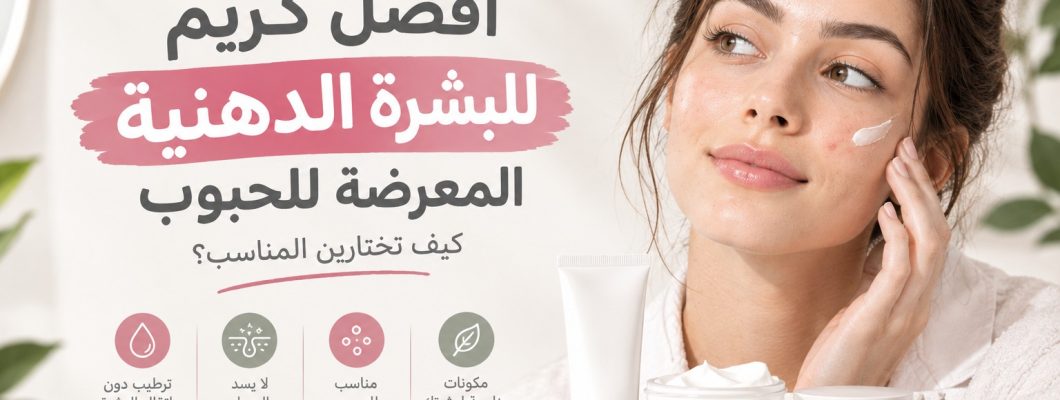
Best Moisturizer for Oily, Acne-Prone Skin: How to Choose the Right One
Choosing the best moisturizer for oily, acne-prone skin can seem confusing, especially when your skin looks shiny on the one hand but still needs hydration on the other.
Having oily skin does not mean that you do not need a moisturizer, and acne-prone skin does not necessarily require harsh or extremely drying products.
The best choice depends on the formula, ingredients, your skin's needs, and how well the product works with acne-prone and congestion-prone skin.
In this guide, we will explain how to choose the right moisturizer for oily, acne-prone skin, which ingredients to look for, and which formulas may be better avoided if your skin does not tolerate heavy products.
Does Oily, Acne-Prone Skin Need a Moisturizer?
Yes.
Having excess oil does not automatically mean that your skin is getting all the hydration it needs.
Oily skin can become dry or dehydrated due to:
Using a harsh cleanser too frequently.
Over-exfoliating.
Acne treatments that cause dryness.
Washing your face several times a day.
Using products that are not suitable for your skin type.
When your skin becomes dry or irritated, you may experience discomfort, tightness, and flaking, even if your skin continues to produce excess oil.
Therefore, it is important to include a suitable lightweight moisturizer in your oily skin care routine rather than skipping hydration altogether.
What Makes the Best Moisturizer for Oily, Acne-Prone Skin?
When choosing a moisturizer for oily, acne-prone skin, do not focus only on the words "for oily skin."
There are several factors worth considering.
1. Lightweight Formula
Lightweight formulas are generally more comfortable for oily skin, especially during the day.
You may find moisturizers in several forms, such as:
Gel
Gel-Cream
Lightweight Cream
Lotion
Emulsion
This does not mean that traditional creams are unsuitable. However, a lighter texture may feel more comfortable if you struggle with excess shine or dislike a heavy feeling on your skin.
2. Non-Comedogenic
Some skincare products are labeled Non-Comedogenic, meaning they are formulated to be less likely to clog pores based on the manufacturer's testing or criteria.
However, this label alone does not guarantee that a product will work for everyone.
Every person's skin is different, and a product that works well for acne-prone skin may not work the same way for someone else.
Pay attention to how your skin responds after introducing any new product.
3. Hydration Without a Greasy Feel
Look for a moisturizer that provides adequate hydration without leaving a heavy or greasy layer on your skin.
Some hydrating ingredients commonly found in lightweight formulas include:
Hyaluronic acid.
Glycerin.
Panthenol.
Ceramides.
Betaine.
These ingredients can help support skin hydration, but the overall formula is still more important than relying on a single ingredient.
Best Moisturizer Ingredients for Oily, Acne-Prone Skin
There is no single list of ingredients that works for everyone, but some ingredients are commonly found in products designed for oily and acne-prone skin.
Niacinamide
Niacinamide is a popular ingredient in products for oily skin and can be found in moisturizers, serums, and other skincare products.
It is commonly used in skincare routines to help improve the appearance of the skin and support the skin barrier. It may also be a useful option if you are looking for a multitasking formula.
Hyaluronic Acid
If your skin is oily but also feels dry or dehydrated, hyaluronic acid can be a useful hydrating ingredient.
It does not make a moisturizer greasy on its own and can be incorporated into lightweight formulas suitable for oily skin.
Ceramides
Ceramides are important components of the skin barrier and are found in many moisturizing products.
Formulas containing ceramides may be particularly useful when oily skin is also dry or sensitive due to the use of treatment products or exfoliating ingredients.
Panthenol
Panthenol is commonly used in moisturizing and skincare products and can be found in formulas designed for sensitive skin or skin that needs additional hydration and comfort.
Does a Heavy or Oily Moisturizer Cause Acne?
Not necessarily.
It is a common misconception that every rich or oil-based moisturizer directly causes acne in everyone.
However, if your skin is oily and prone to clogged pores, you may find heavier formulas less comfortable, and they may not be your first choice.
Instead of asking:
"Does a heavy moisturizer cause acne?"
It may be more useful to ask:
"Is this moisturizer's formula suitable for my skin type and its specific needs?"
The overall formula, how you use the product, and the other products in your skincare routine can all influence how your skin responds.
Best Moisturizer Texture for Oily, Acne-Prone Skin
Choosing the right texture can make a significant difference in how your skin feels after applying moisturizer.
Gel-Cream
Gel-cream moisturizers are popular among people with oily skin because many formulas have a lightweight texture and absorb quickly.
They may be suitable if you do not like feeling a heavy layer on your face.
Gel
Gel moisturizers are often lighter than traditional creams and can be suitable for very oily skin, particularly in hot weather.
However, keep in mind that some gel formulas may not provide enough hydration for dry or compromised skin.
Lotion or Emulsion
These formulas can offer a middle ground between a rich cream and a lightweight gel.
They may be suitable for oily skin that still needs adequate hydration without a heavy texture.
Traditional Cream
Traditional creams can also work for oily skin, especially when the skin is dry or the skin barrier has become weakened.
Choose a formula that feels comfortable on your skin, and avoid applying a large amount if your skin does not tolerate rich textures.
Best Moisturizer for Oily, Acne-Prone Skin Based on Your Skin Concerns
Not everyone with oily, acne-prone skin experiences the same concerns.
Oily Skin With Acne
Choose a lightweight moisturizer suitable for acne-prone skin and focus on hydration without adding unnecessary steps to your routine.
Oily Skin With Blackheads
A lightweight moisturizer that does not feel heavy on the skin may be a better choice. At the same time, maintain an appropriate cleansing and exfoliation routine when needed.
Oily Skin With Enlarged Pores
A moisturizer cannot permanently close pores, but choosing a lightweight formula may help your skin look and feel more balanced instead of adding a heavy, greasy layer.
Oily and Sensitive Skin
In this case, choose a simple and gentle formula, and avoid introducing several new products at the same time.
Oily but Dry Skin
If you experience excess oil and flaking at the same time, you may need a more hydrating moisturizer rather than relying only on very lightweight formulas.
Should You Choose a Moisturizer With Acne-Fighting Ingredients?
There is an important difference between a daily moisturizer and a dedicated acne treatment.
A moisturizer may contain beneficial ingredients for oily skin, but that does not mean it is an acne treatment.
If you have persistent or inflamed acne, you may need a dedicated treatment based on your skin's condition. In some cases, it may be better to consult a dermatologist rather than randomly trying multiple products.
If you are simply looking for a daily moisturizer, focus on:
Hydration + suitable texture + no heavy feeling + compatibility with acne-prone skin.
Moisturizer or Treatment Cream? What Is the Difference?
| Product Type | Main Purpose |
|---|---|
| Moisturizer | Maintain skin hydration and support the skin barrier |
| Lightweight moisturizer for oily skin | Hydration with a comfortable, lightweight texture |
| Non-comedogenic moisturizer | Formulated to be less likely to clog pores |
| Moisturizer with active ingredients | May provide additional benefits depending on the ingredients |
| Acne treatment | Designed to address acne using specific active ingredients |
For this reason, do not choose a product based only on the word "cream."
Read the ingredients, understand how the product is intended to be used, and identify its main purpose.
Common Mistakes When Choosing a Moisturizer for Oily, Acne-Prone Skin
Skipping Moisturizer Because Your Skin Is Oily
This is one of the most common mistakes.
Oily skin still needs hydration, but it needs the right formula, not necessarily a heavy cream.
Using a Very Heavy Moisturizer
If your moisturizer leaves an uncomfortable greasy layer and makes your skin feel congested, it may not be the best option for you.
Changing Products Too Frequently
If you struggle with acne, changing your moisturizer, cleanser, and serum at the same time makes it difficult to determine which product works for your skin or which one may be causing problems.
Introduce new products gradually whenever possible.
Applying Too Much Moisturizer
Your skin does not need a thick layer of cream to stay hydrated.
Use the amount recommended by the product and gently spread it over your skin.
Choosing a Product Based Only on Trends
A product becoming popular on social media does not mean it is suitable for every skin type.
What matters is the formula and your skin's individual needs.
How to Use Moisturizer for Oily, Acne-Prone Skin
Your routine can be simple.
Morning:
Gentle cleanser.
Serum if needed.
Suitable moisturizer.
Sunscreen.
Evening:
Remove makeup and sunscreen when necessary.
Use a suitable cleanser.
Apply your treatment or serum as part of your routine.
Apply moisturizer.
You do not need a large number of products to build an effective skincare routine.
In many cases, a simple and balanced routine is easier to maintain and less likely to overwhelm the skin.
Can You Use a Moisturizer for Oily Skin Under Makeup?
Yes, as long as the texture is suitable.
Choose a fast-absorbing moisturizer that does not leave a heavy or overly shiny layer if you plan to apply makeup afterward.
Using an appropriate amount of moisturizer and allowing it some time to absorb before applying makeup may also help create a smoother base.
How Do You Know if a Moisturizer Is Right for Your Skin?
After introducing the moisturizer into your routine, pay attention to how your skin responds.
Positive signs include:
Your skin feels comfortable after application.
No unpleasant dryness or tightness.
No significant increase in greasy feeling.
No persistent irritation.
The texture works well with your daily routine.
However, if you notice persistent irritation or a clear worsening of acne after introducing the product, stop using it and also review the ingredients and other products in your routine.
Does Oily Skin Need a Moisturizer in Summer?
Yes, but you may prefer a different texture.
During hot weather, a Gel, Gel-Cream, or Lotion may feel more comfortable than a rich cream.
In winter, or when your skin becomes dry, you may need a more hydrating formula.
This means that the best moisturizer for oily skin does not necessarily have to remain the same throughout the year. Your skin's needs can change depending on the weather, your skincare routine, and the overall condition of your skin.
Conclusion: What Is the Best Moisturizer for Oily, Acne-Prone Skin?
The best moisturizer for oily, acne-prone skin is one that provides the hydration your skin needs without a heavy texture or an uncomfortable greasy feeling, while also being suitable for skin that is prone to clogged pores.
Look for a texture that works well for you, such as a gel, gel-cream, or lotion. You can also look for hydrating ingredients such as hyaluronic acid, glycerin, panthenol, and ceramides.
If your skin is noticeably acne-prone, do not rely on your moisturizer as the only treatment. Instead, build a well-rounded skincare routine and use appropriate acne treatments when necessary.
Most importantly, oily skin does not need to be constantly stripped of its natural oils to become more balanced. The goal is to find a balance between managing excess oil, maintaining hydration, and supporting the skin barrier.
Leave a Comment